Flower Arrangements for Home, Room by Room Ideas
Flower Arrangements for the Home
Flower arrangements for home are 3 to 7 stems grouped into a single vessel, and a good living room arrangement runs 24 to 32 inches tall from the table surface.
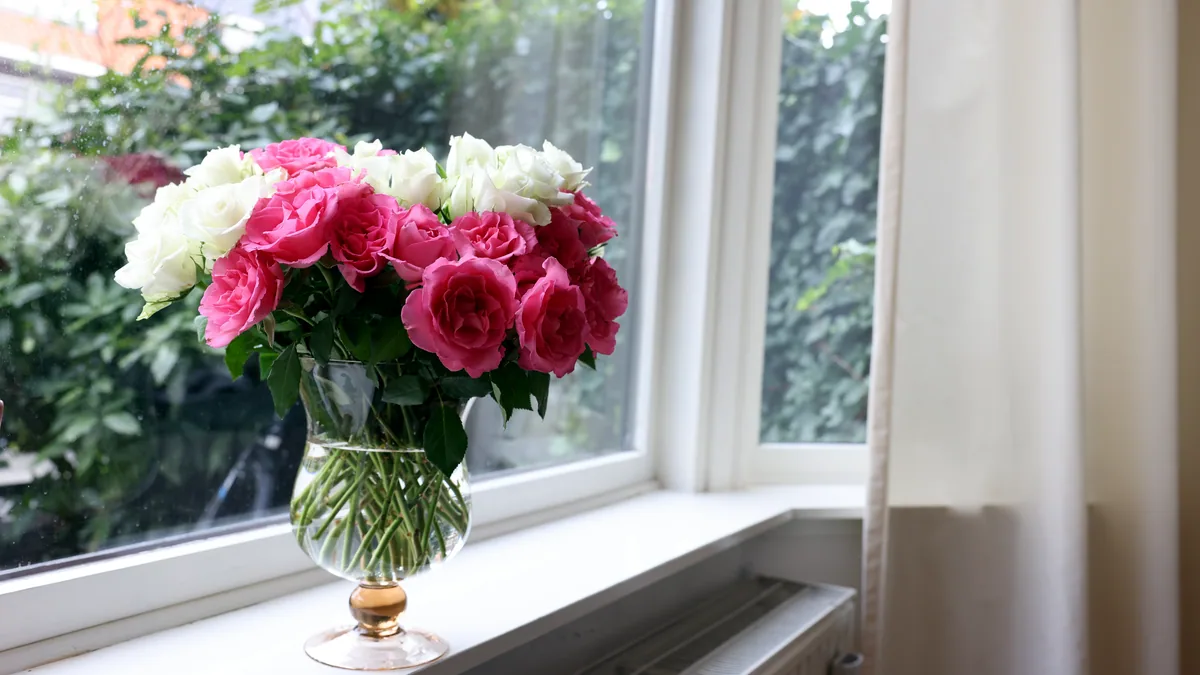
That is the whole object, and you can build one in 45 minutes with flowers from the local market for under 15 pounds. This page defines the arrangement as a practical thing you pick up and make, room by room, and it works as one of the Hands-on activities for later life that keeps both the hands and the senses busy.
What a home arrangement is and where it goes
A home arrangement is a bouquet you keep and display rather than one you hand to someone, so the rule is to match the flowers to the room they will stand in. A living room table holds a statement piece at 24 to 32 inches, a dining table a low arrangement under 12 inches, and a bedside or window sill a small bunch of 5 to 7 stems. Start with the surface, then choose the height, and the arrangement reads as decor instead of a decoration that fights the furniture.
The living room table as the main stage
The living room table is where the arrangement gets the most eye time, and the height matters most there. A tall 32 inch piece pulls the eye up and fills the middle of the room, while a low 12 inch bowl keeps sight lines open between seats. If the table sits under a window, choose flowers that read in backlight, such as ranunculus, zinnia and a few sprigs of greenery, so the shape holds even when the sun turns the petals to a flat gold.
How to build an arrangement for the home, step by step
To build an arrangement for the home, follow 6 steps and keep the total under 45 minutes. First, strip every stem to the last leaf you want to show. Second, cut each stem at an angle with sharp scissors. Third, place the 3 tallest stems in a triangle so the height is 24 to 32 inches at its peak. Fourth, add the middle stems to close the gaps. Fifth, finish with 2 to 3 sprigs of foliage at the front to soften the edge. Sixth, fill the vessel with water to 3 inches below the rim and set the whole thing on the table where it will live.
What to buy and how much a budget run costs
A budget run for a full home arrangement costs about 15 pounds for a 24 to 32 inch piece that lasts 5 to 7 days, and the trick is to buy 2 kinds of bloom instead of 4. A working budget is 2 bunches of one focal flower, 1 bunch of a filler, and a small bundle of eucalyptus or fern for the green, which totals roughly 9 to 15 pounds at most local flower markets on a Saturday morning. Keep the count low and the arrangement still looks full, because the greenery does the filling work that a fourth flower would only repeat. For anyone who wants a guided version of these same steps, a Flower Arranging for Seniors session is the clearest way to learn the triangle placement and the cutting angle without trial and error at the kitchen table. Many community centres and libraries run a A Flower Arranging Class for Seniors on a term basis, and the class usually covers exactly these 6 steps at a bench with all the tools laid out.
Choosing flowers for each room, matched by size
The right flowers for each room are chosen by the size of the surface, and the table below keeps the height, the stem count and the cost in one place so you can read the whole house at a glance.
| Room and surface | Height from the table | Stem count | Typical cost | Best flowers |
|---|---|---|---|---|
| Living room table | 24 to 32 inches | 9 to 11 | 12 to 15 pounds | Ranunculus, zinnia, eucalyptus |
| Dining table | Under 12 inches | 7 to 9 | 8 to 12 pounds | Rose, chrysanthemum, fern |
| Bedside or window sill | 6 to 10 inches | 5 to 7 | 5 to 8 pounds | Gerbera, freesia, baby's breath |
| Hallway console | 12 to 18 inches | 7 | 6 to 9 pounds | Orchid, lily of the valley, greenery |
Read the height row first, because the height is what makes the arrangement fit the room rather than sit on it. A tall living room piece should never drop below 24 inches, and a dining piece should never climb past 12 inches, or it will block the conversation across the table.
Keeping the arrangement fresh and making it last
An arrangement that lasts 5 to 7 days in the home needs 3 small habits, and each one takes under 2 minutes a day. Change the water every 2 days and re-cut the stems by 1 inch at the same angle. Keep the vessel out of direct afternoon sun, since 2 hours of strong light on a sill will cut a week of life down to 4 days. Remove any stem that droops on day 3, and the rest will keep going to day 7. The goal is to make the arrangement the last thing to fade in the room, not the first.
How the arrangement serves the senses and the company
The arrangement serves the senses and the company because it gives the eye a focal point and the hands a task that ends with something to keep. For the senses, a full 24 to 32 inch piece carries a scent, a texture and a colour that the eye picks up across the whole room, which is why a living room arrangement feels different the moment the flowers are cut and grouped. For the company, the act of arranging is a shared one, and a Flower Arranging for Seniors workshop sets up 2 people at one bench with a single budget of 15 pounds to split, so the work becomes a conversation as much as a craft. That is the practical value of the piece: the room gets refreshed on a budget, and the person who made it gets a 45 minute task that is finished, useful and finished by the time the kettle comes back.
When the arrangement turns into a seasonal one
A home arrangement becomes a seasonal one when the calendar gives the flowers their shape, and the clearest example is the winter table. In that case the same 6 steps still apply, but the palette and the height shift, and the 24 to 32 inch living room rule relaxes to a shorter, denser bowl because the room has less daylight to carry a tall silhouette. Christmas Flower Arrangements follow that pattern, with 9 to 11 stems of amaryllis, holly and a few sprigs of cedar for the green, and a cost that creeps from 15 pounds to 20 to 25 pounds over the last 4 weeks of December. The point of keeping the steps the same is that the seasonal piece is not a new skill, only a new palette, so a person who can build the everyday arrangement can build the seasonal one without learning anything fresh.