Halloween Flower Arrangements with Dark and Seasonal Blooms
Flower Arrangements for Halloween
Halloween flower arrangements are seasonal floral displays built around deep, dramatic tones such as black, deep burgundy, burnt orange, purple and dark brown, and most people finish a tabletop arrangement in 45 to 90 minutes with 20 to 30 stems gathered from a local florist or garden.
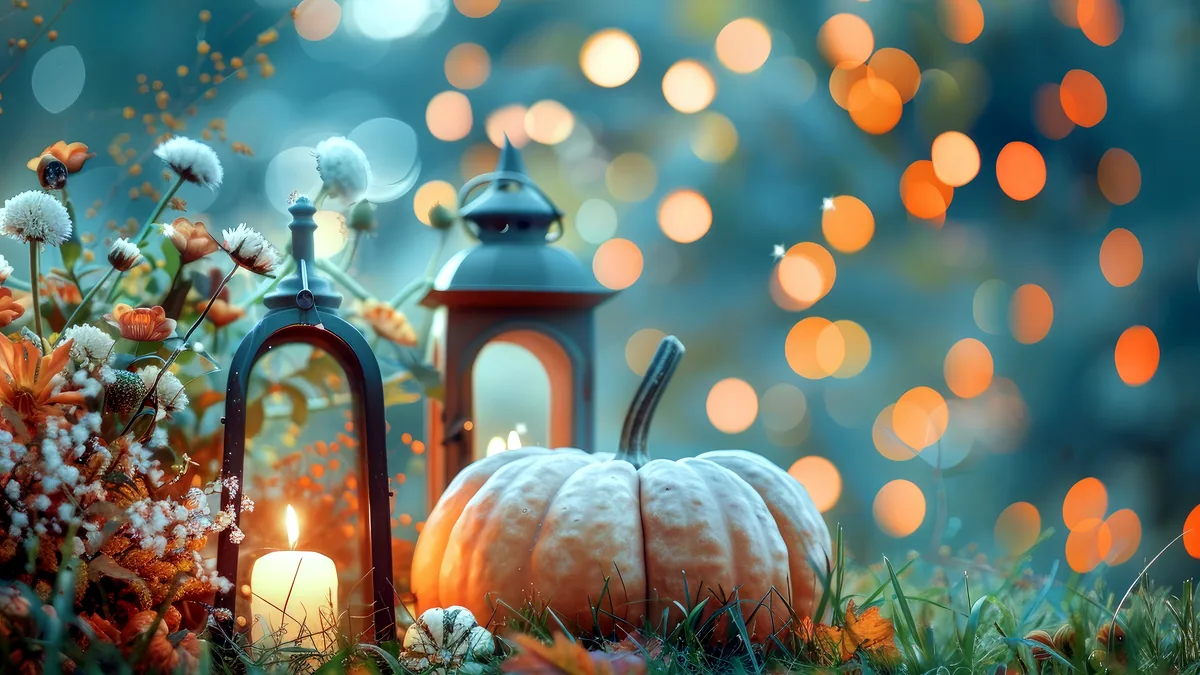
They serve a single practical purpose: they turn a bare dining or side table into a seasonal centerpiece that anchors a whole room without the plastic, paper and streamers that make up a typical Halloween decoration, so the same arrangement keeps working on the table all week after the night passes.
This page belongs to the flower section of elderlyactivities.co.uk, a hands-on activity site for older adults, where a flower arrangement is the kind of task a person can pick up and complete at a kitchen table with tools within reach. It is a companion to Flower Arranging for Seniors, which covers the everyday tools and technique, and the work fits naturally into A Flower Arranging Class for Seniors as one of the seasonal projects a group might make together. Because the method is identical to Christmas Flower Arrangements, anyone who has already arranged a winter display can move into this Halloween project in a single afternoon with no new skills.
Why Dark and Seasonal Blooms Work for Halloween
Dark and seasonal blooms work for Halloween because they carry the colors the holiday is known for, so the room reads as seasonal before a single prop is placed. The palette that suits the night is deep burgundy, burnt orange, purple, black and dark brown, and these five tones are easy to find in late October because the same flowers are at the end of their season. A florist will stock chrysanthemums in dark maroon, dahlias in burnt orange and deep purple, and roses in a near-black color, and these are the three flowers that carry most Halloween arrangements on their own.
Dark tones also hide the aging that makes cut flowers look tired, which matters at a kitchen table where an arrangement stays for several days. A deep burgundy rose shows less bruising than a pale pink one, and a purple chrysanthemum shows less fading than a bright white one, so a dark display looks as good on day 3 as it does on day 1. The result is a centerpiece that does not need replacing over the run up to the night.
The Materials for a Halloween Flower Arrangement
The materials for a Halloween flower arrangement are the same as any flower project plus a small set of seasonal extras, and the full list fits in one flat bag. The counts below are for a tabletop arrangement that is roughly 25 cm wide and 30 cm tall.
| Material | Amount | Role in the arrangement |
|---|---|---|
| Deep burgundy or dark maroon chrysanthemums | 6 to 8 stems | Dark focal color and bulk |
| Burnt orange or deep purple dahlias | 4 to 6 stems | Seasonal orange and purple tones |
| Near-black or deep red roses | 3 stems | Height and a dramatic center point |
| Dark green foliage such as eucalyptus or fern | 4 to 6 stems | Framework that fills gaps |
| Low-profile glass or ceramic vase | 1, about 20 cm tall | Holds the stems and water |
| Floral stems, scissors and a towel | 1 of each | Tools to cut and hold the stems |
| Pumpkin, dried wheat or dark ribbon (optional) | 1 each | Seasonal props placed beside the vase |
A small set of props placed on the table next to the vase does most of the seasonal work, and 2 or 3 of them is enough. A single small pumpkin, a few heads of dried wheat, or a dark ribbon tied around the neck of the vase all read as Halloween without adding clutter to the flowers themselves.
Choosing the Vase
Choose a vase that is wide and low rather than tall and narrow, if the arrangement is for a dining table, because a low vase keeps the flowers at eye level for people sitting down. A clear glass bowl about 20 cm tall works for most tables, and a dark ceramic vessel in black or brown deepens the overall color. The vase needs a base of 15 to 20 cm so the stems have room to fan out before they rise.
Step by Step: Arranging the Flowers
To arrange the flowers, work through the steps in order from the base to the top, and the whole build takes about 45 to 90 minutes. Follow each step before moving to the next, and the arrangement holds its shape as it grows.
- Fill the vase with cold water to about 20 cm and let it sit for 1 minute while you prepare the stems.
- Cut each stem at a 45 degree angle with clean scissors, removing any leaf that would sit below the water line.
- Place the 4 to 6 foliage stems first, fanning them out in a circle to form the base framework of the arrangement.
- Add the 6 to 8 dark chrysanthemums around the center, spacing them evenly so the dark color forms a solid ring.
- Set the 4 to 6 dahlias into the gaps between the chrysanthemums, alternating the burnt orange and the deep purple so the two tones balance.
- Stand the 3 roses in the middle, holding them 5 to 10 cm taller than the rest to create a clear center point.
- Fill any remaining gaps with a final leaf or two, then step back and check that the front, back and both sides look even.
The angle on the cut is the step most beginners rush, and a clean 45 degree cut at the base of every stem is what lets the flowers drink water and stay fresh for 5 to 7 days. Taking 30 seconds on each cut is the difference between an arrangement that lasts the week and one that wilts by day 2.
Sensory and Social Purpose of the Activity
The sensory and social purpose of the activity is to give the hands something precise to do and to give the table a reason for two people to sit down together. The work moves through several senses in one sitting: the hands feel the weight of each stem and the cool water, the nose meets the scent of the roses and chrysanthemums, and the eyes track the dark color building against the green. For an older adult, this mix of touch, smell and sight is a gentle kind of focus that does not depend on reading or on fast movement.
The social side comes from the shape of the task itself, and that is the part that makes it work at a class. One person can hold a stem in place while another adds the next, and the arrangement keeps growing as a shared piece rather than a solo one. A group of 4 or 6 people working around one table can produce a whole set of centerpieces in an afternoon, and the finished row of vases becomes something the group can all point to. That is why the same project is a staple of A Flower Arranging Class for Seniors and why it fits the hands-on activity model that this site is built around.
How to Keep the Arrangement Looking Good
To keep the arrangement looking good, treat it as a living thing that needs 3 small tasks over its life, and each one takes less than 2 minutes. Care is the difference between a display that lasts the whole season and one that fades by the middle of the week.
- Change the water every 2 days, rinsing the stems lightly as you do so.
- Recut each stem by about 2 cm every 3 days to keep the drinking ends open.
- Remove any single petal or leaf that falls to the bottom of the vase, so the water stays clear.
With these 3 tasks, a Halloween arrangement in a low glass vase typically lasts 5 to 7 days, which covers the weekend and the night itself. The dark colors are the last to fade visibly, so the arrangement still reads as seasonal right up until the flowers are spent. Once the display is done, the same stems, the same vase and the same steps carry straight into the winter projects, and the next one on the list is the set of Christmas Flower Arrangements that uses this method with a red, green and white palette.