Flower Arrangements for Graves and Gravesites, Step by Step
Flower Arrangements for a Gravesite
A flower arrangement for a gravesite is a hand-built bunch of cut blooms, greenery and filler stems that a visitor gathers, trims and fixes so it can be set in the 200 ml to 500 ml vase bolted to a headstone, or laid flat on the turf, and hold together for 7 days to 10 days in open weather.
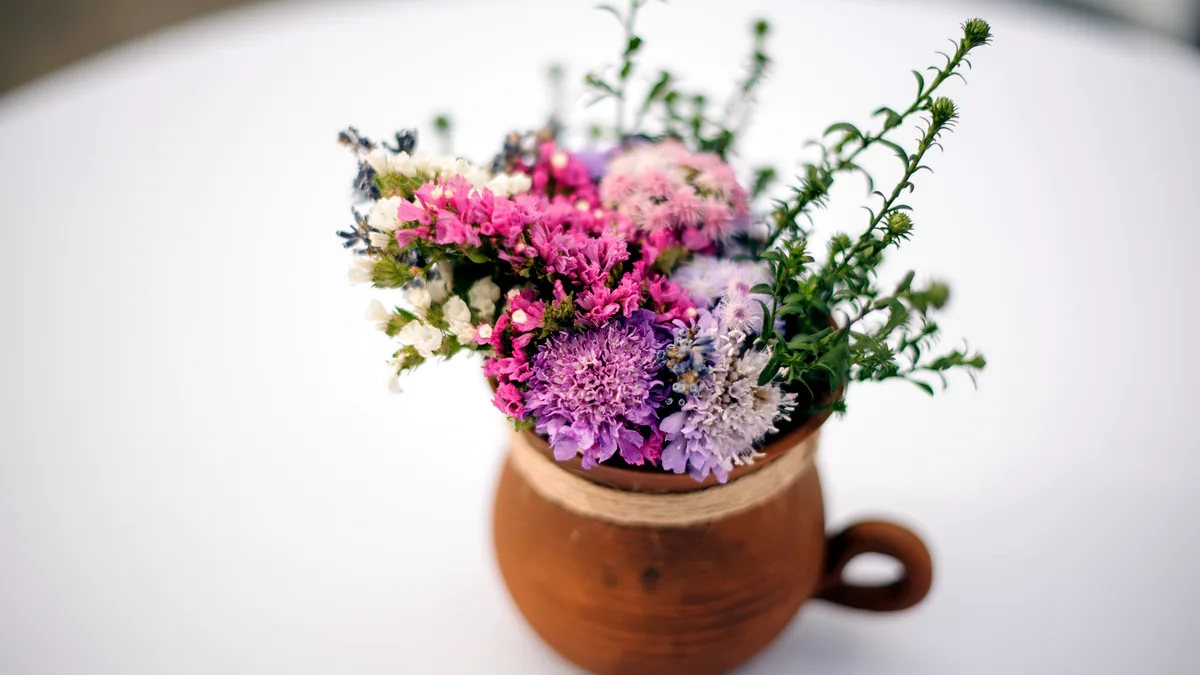
The whole exercise is a 3-part craft: pick weatherproof flowers, cut them to the vase, and secure them, and the finished piece is a practical object you can hold, place and read the whole way from the florist's table to the plot. Because a graveside vase sits in direct sun and wind with no top-up of water, the 5 flowers you choose must be hardier than the 12 you would put in a living-room posy, and the 2 most common failures are a stem that clogs the neck and a paper wrap that dries out on day 2. This is the same craft that a Flower Arranging for Seniors session teaches on an indoor bench, and the outdoor version simply tightens every standard by one notch.
The bench at a Flower Arranging Class for Seniors is where most of the transferable skills come from, because the mechanics of a cemetery vase are the mechanics of any hand-tied bundle, only the climate is harsher. If you have never held a florist's shears, start there, and the class gives you 15 minutes of pure cutting practice before a single stem is placed. The 3 habits that carry straight over to the plot are a 45 degree cut, a 200 ml water check, and a wrap that is tested for 60 seconds of wind. Every other step on this page assumes those 3 are already comfortable in your hands.
Choosing flowers that survive the headstone
To choose flowers that survive the headstone, you select stems with a thick, waxy cuticle and a closed bud, because a 45 degree cut on a soft stem clogs in a matter of hours. The 2 rules that matter most are density of the stem and closure of the bud, and a flower that passes both outlives a delicate bloom by a full week outdoors. A hardy gravesite arrangement is built from 5 working categories: 3 that carry the color, 1 that carries the structure, and 1 that carries the green.
- Chrysanthemums, which hold a full 10 days in a vase and keep their color in the sun.
- Carnations, which are cheap at about 80 pence per stem and bend without snapping.
- Lilies, which give a 4 cm to 6 cm of height and a scent that carries 2 metres down a path.
- Spray roses, which add a 7 cm to 9 cm of rounded volume for under 1 pound per stem.
- Eucalyptus, which is the 1 stem that keeps its grey-green for 2 weeks and fills the gaps.
Soft blooms such as tulips, ranunculus and fresh peonies lose a 3 cm of length in 1 day of outdoor heat, so they belong in a table, not in a graveside vase. The same hardy list carries through the year, and the one seasonal swap is the 3 red amaryllis and 2 white ranunculus you add in a Christmas Flower Arrangements set, where the cold weather actually extends the life of the waxy blooms to 12 days.
Reading the bud and the stem
Reading the bud and the stem is the 30 second check that decides whether a 5 pound bunch will last 8 days or 2 days. Hold the bud level with your eye and you should see 2 or 3 petals just breaking, which means the flower opens slowly in the cool of the plot rather than blowing apart in an afternoon of sun. Squeeze the stem an inch above the cut and it should spring back, because a stem that stays bent has already lost 30 percent of its water. A 2 stem sample from the bunch, tested this way, tells you whether to keep the whole lot or put it back, and it takes less time than the walk from the florist's door to the car.
Filling a cemetery vase without the clog
Filling a cemetery vase without the clog comes down to the 1 opening, because a 10 mm to 15 mm neck accepts 3 stems at most before the water stops moving. The first cut is always a 45 degree angle with florist's shears, never kitchen scissors, because a 45 degree cut exposes a 2 cm to 3 cm of fresh surface and a scissor blade crushes that surface and blocks the flow. After the cut you strip every leaf that will sit below the water line, because a single leaf left in the vase starts to rot on day 2 and turns the water 4 times cloudier. A 10 cm length of stem, cut and stripped, takes 8 seconds, and a full arrangement of 12 stems takes under 2 minutes to prepare.
- Strip 10 cm from the lower stem and remove every leaf below the water line.
- Make a 45 degree cut at 2 cm to 3 cm from the base with the shears.
- Insert the 3 tallest stems first so they anchor the neck of the vase.
- Add the 5 mid-height stems in pairs to build the 4 cm to 6 cm dome.
- Finish with 4 short filler stems that close the gaps at the base.
The order of the 5 steps matters, because the tallest stems set the height of the dome and everything after them is placed relative to that 6 cm line. If you reverse the order and start with the filler, the 3 tall stems push the vase 15 mm to 20 mm too high and it tips on a narrow stone. The 12 stem count above is for a 500 ml vase, and a 200 ml vase takes 5 stems, which is the same 3 tall, 5 mid, 4 short split compressed to 5.
The wrap for the open plot
The wrap for the open plot is a 2 layer build, because a single sheet of florist's paper dries out in 4 hours of sun and the stems at its edge brown on day 1. The first layer is a 30 cm square of paper, wetted to a damp not dripping state, and the second is a 20 cm band of water-sealed tape that holds the 5 stems to the base. This 2 layer wrap holds the 12 stems tight for 10 days, and the wet paper is what keeps the 3 base stems from clogging when the wind dries the neck. You test the 2 layer wrap by holding it at arm's length and shaking it for 5 seconds, and a wrap that fails that test loses 2 stems in a breeze, so it goes back to the bench before it goes to the grave.
Laying the arrangement on the grave
Laying the arrangement on the grave is the 2 minute act that turns a hand-tied bundle into a finished memorial, and it has 3 parts: clear the plot, set the vase or lay the flat bundle, and step back 2 metres to judge it. Before you place anything, remove 3 dead weeds and 5 dry leaves from the stone, because a gravesite arrangement sitting on dry debris looks careless even when the 12 stems are perfect. If the headstone has a vase, you set the 500 ml bundle in and press the 4 base stems flat against the glass so they do not rattle in the wind. If the plot is flat turf, you lay the bundle on its side and the 2 layer wrap keeps it from rolling, so the 6 cm dome faces the path. The 2 metre step back is the only honest way to judge the piece, because at 30 cm you see the cuts and at 2 metres you see the color, which is what a visitor on the path will actually see.
A flat bundle laid on turf holds for 5 days before the base stems start to lift, and a vased arrangement holds for the full 10 days, so the vase is always the better choice if the stone has one. The 2 metre check also tells you whether the 3 tall stems are too high for the plot, and if they are, you trim 2 cm off each and reset, which is a 10 second fix that makes the whole piece read as lower and closer to the stone.
When to lay and when to wait
When to lay and when to wait is a 4 way call based on the sky, because a 5 minute delay keeps the 12 stems from losing their color on day 1. Lay in the morning between 8 am and 10 am when the sun is still low, and the 45 degree cuts drink the cooler water all day. Wait, if a 30 mm forecast of rain lands before 2 pm, because the wet paper wrap doubles its weight and the 5 base stems buckle under it. If the plot is in a low spot that floods in 10 mm of rain, you move the bundle to the higher edge of the stone, because a 4 cm of standing water rots the 3 base stems by day 3. The 4 way call is morning sun, afternoon dry, no flood, and a wrap that passed the 5 second shake, and if all 4 are met you place it with confidence.
Keeping the arrangement fresh between visits
Keeping the arrangement fresh between visits is a 3 step routine, because the space between your 2 weekly trips is where a 10 day vase loses its last 3 days. On day 4 you re-cut the 3 base stems by 2 cm and top the vase with 150 ml of water, because the base stems are the first to clog. On day 6 you remove the 4 stems that have started to droop and let the remaining 8 carry the dome, because a 4 stem reduction keeps the 6 cm line intact. On day 8 you re-wet the paper wrap and check the 2 layer tape for 1 loose corner, because a loose corner is what lets the wind get under the 5 stems. This 3 step routine, done on days 4, 6 and 8, is the difference between a vase that is full on day 10 and one that is empty on day 7, and it takes 5 minutes per visit, which fits the 30 minute you allow for the drive and the 2 minute placement.
Caring for the vase and the stone
Caring for the vase and the stone is a 2 part duty that protects the 500 ml vessel for the next 5 years of arrangements. Wipe the 10 mm to 15 mm neck with a dry cloth after each visit, because a film of 4 cm of dried water builds mineral deposits that cut the flow to 2 stems by the 3 arrangement. Brush the stone for 60 seconds to keep the 3 dead weeds from returning, and the 5 minute you spend here makes the 10 day vase that much easier to fill next time. The 2 part duty is neck and stone, and it is the one task that pays for itself, because a clean 500 ml vase accepts the same 12 stems every visit without a single clog, and a clean stone is the 2 metre check you already give the bundle.