Flower Arrangements for Events, Baptisms
Flower Arrangements for Events
Flower arrangements for events are cut-stem pieces a host buys, assembles and places on a venue's tables and focal points, and the core of a small-event plan is the size, shape and order you commit to before any flower is opened.
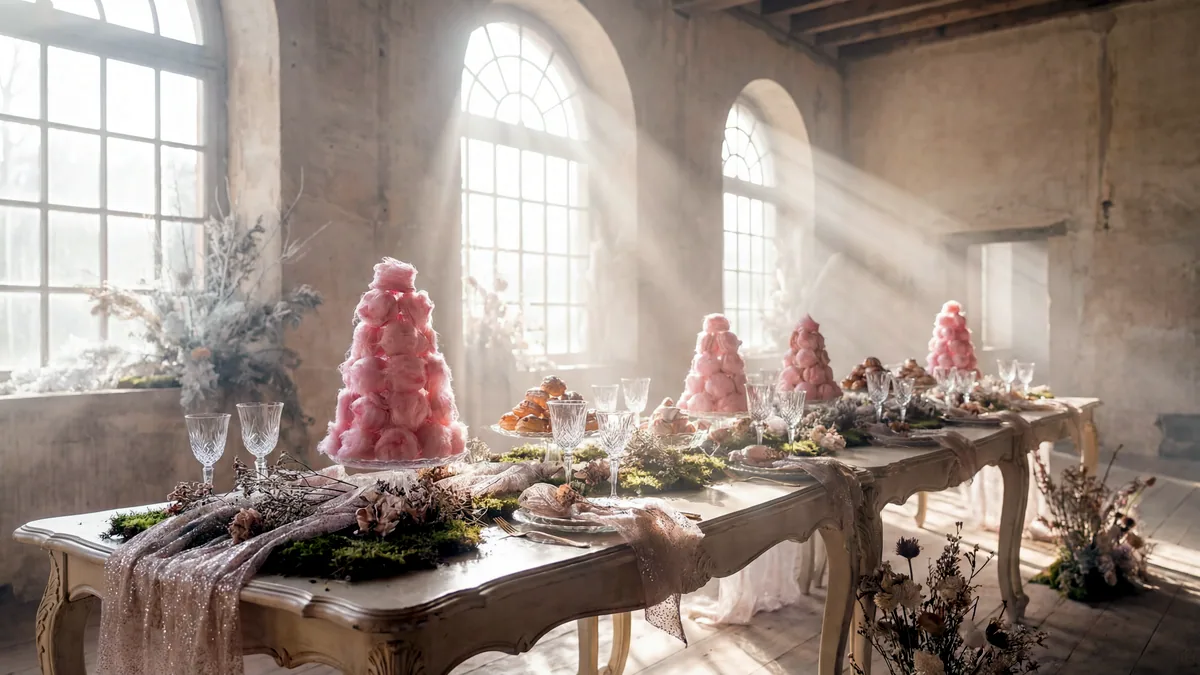
For a baptism, buffet table or hall party of 20 to 50 guests, one central centrepiece of 30 to 40 stems, paired with 3 to 6 place settings of 5 to 9 stems each, covers the room in 2 to 3 hours of work from a single person. The method below sizes the room, names the shapes, walks through the build, and explains the sensory and social purpose the work serves.
Before you build anything, settle who is doing the placing. A family member who has never held a bucket of roses works fine, if the stems arrive pre-trimmed and the plan is short, but a confident beginner benefits from a first guided build. The two routes that fit a home setting are a self-paced kit, where a printed sheet of the sizes above is enough, and A Flower Arranging Class for Seniors, where a tutor handles the cutting angles and water discipline that take the most trial. Choose the class route, if the event is a milestone and the host wants to repeat the work later, because the same steps then carry forward to every gathering.
Flower Arranging for Seniors suits a seated, seated-at-the-table build especially well. The task is a low one on the body: stems rest on the counter at waist height, the vase fills to a fixed line, and the only standing is to reach the fridge for a fresh bucket of water. The mind keeps working throughout, because the host is deciding which stem leads, which supports and which fills the gaps, and a 45 minute session of that kind is a genuine use of the day.
Sizing the venue: how many stems, and where
To size an event, match the stem count to the room and the table layout, and let the room set the number before you open a single stem. The rule of thumb is a centrepiece of 30 to 40 stems for a head table or a buffet table, plus a place setting of 5 to 9 stems for each chair that needs one. A hall for 30 guests with 2 head tables and 8 place settings therefore wants roughly 60 to 80 stems for the centres and 40 to 72 for the settings, a total of 100 to 152 stems that one person can trim and place in a single morning. The table below fixes the numbers for the three layouts that most home events actually use.
| Layout | Guests | Centrepieces | Place settings | Total stems |
|---|---|---|---|---|
| Baptism, 1 head table | 10 to 15 | 1 | 4 to 6 | 50 to 90 |
| Buffet table, 1 long table | 20 to 30 | 2 | 6 to 10 | 110 to 170 |
| Hall party, 2 head tables | 30 to 50 | 4 | 8 to 14 | 220 to 360 |
Choosing the shape for a baptism
To pick the shape for a baptism, choose the low, wide profile that keeps the host and the child's family able to see across the table, and keep every centrepiece under 15 cm (about 6 in) tall. Three shapes carry most small events: a low dome, which reads formal and suits a church hall or a dining room; a cascade, which drops toward the floor and suits a buffet table or a window ledge; and a single-stem focal, which uses one strong bloom, a garden rose or a lisianthus, as the whole centrepiece and suits a place setting. For a baptism, the low dome of 30 to 35 stems in soft white and cream, with a short trailing sprig of eucalyptus, is the profile that photographs well and still lets the priest and the parents meet across the table. The dome is the shape to reuse for a Christmas Flower Arrangements set, if the host wants the same silhouette in a deeper colour a year later, and the same low height that keeps the room open is what the whole plan keeps returning to.
The step-by-step build, from bucket to table
To build the arrangement, run the work in this fixed order so that no step is repeated and the water is never wasted. The order is the same for a dome, a cascade or a single-stem focal, and it takes 15 to 25 minutes per centrepiece and 5 to 8 minutes per place setting.
- Trim each stem at a 45 degree angle to 30 to 40 cm (12 to 16 in), under running water or in a filled bucket so the cut does not seal.
- Strip every leaf that will sit below the water line, because a leaf under water bruises in a day and turns the whole bucket cloudy.
- Fill the vase to the marked line and set the 3 to 5 leading stems, the tallest blooms, spaced evenly around the centre before any filler goes in.
- Build the body around the leads, adding 10 to 15 stems in a spiral so the vase rim is hidden from every angle in the room.
- Fill the gaps with greenery and short secondary stems, and stop the moment the silhouette matches the shape you chose.
- Finish with a final trim of 2 cm (about 0.8 in) off every stem, a last wipe of the rim, and the placement at its spot on the table.
Water, food safety and how the arrangement lasts
To keep the arrangement alive through the event, manage the water and the distance from food, because a cut stem is a living thing that drinks for the length of the gathering and then declines. A centrepiece of 30 to 40 stems drinks roughly 250 to 400 ml of water in its first day, so the vase should start full and the host should top it up once, mid-event, with fresh water rather than adding food to the old water. The food rule is the one that saves a buffet table: keep the centrepiece at least 20 cm (about 8 in) from any plate, because the stem ends and the water line sit at the height where a guest reaches for food, and a wet rim is a slip hazard as well as a hygiene one. Under these two rules, a dome built the morning of the event holds its shape through a 2 hour lunch and still looks set the next day, when the host moves it to a sideboard or a windowsill to finish its life over a further 3 to 4 days.
The sensory and social purpose the work serves
To name the purpose, the build is a shared, low-stakes task that gives the host and the family a thing to do with their hands while the room is being set, and that is the whole social value of the page. The work is a 2 to 3 hour use of the morning, it needs only a counter and a bucket, and it produces a room that the guests notice before they sit down. The hands stay busy in a gentle way: cutting, stripping, placing, a rhythm that is easy to follow and easy to stop, and the same rhythm is what makes the task a Flower Arranging for Seniors project rather than a decoration chore. The guest, in turn, is drawn to the table by the colour and the scent of the greenery, and the centrepiece becomes the point the room is arranged around. That is the practical end of the plan: a sized room, a chosen shape, a fixed build order, and a purpose that is as much about the doing as the result.