Easter Activities for Elderly People at Home
Make something for Easter
Easter activities for elderly people are hands-on making projects a person can pick up and finish in a single sitting, and the 3 core kinds are basket making, paper egg decorating and card making, each pairing a short materials list with a clear sensory or social purpose for the season.
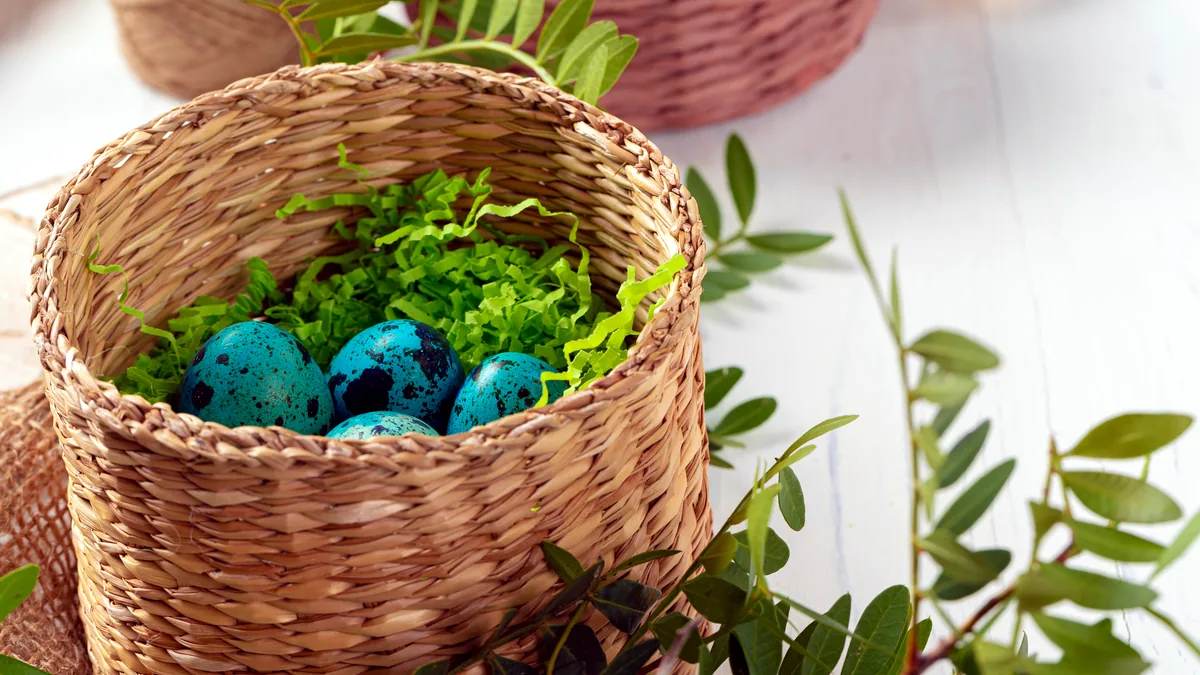
Every project below fits a 20 to 45 minute sitting on a sofa or at a kitchen table, needs no power tools and no oven, and keeps both hands busy at a comfortable pace. These are Activities for elderly people that work even when stamina is low, because each step is small enough to pause and resume between them.
Materials for Easter making
The materials for Easter making stay deliberately small so a person can gather everything in one trip to a shelf. A complete kit for any of the 4 projects below fits inside a 30 centimetre shoebox and costs under 10 pounds at a high street stationery shop or a supermarket craft aisle.
| Project | Core materials | Senses it engages | Time to finish | |
|---|---|---|---|---|
| Basket weaving | 1 bundle of 20 straw or raffia strips, 1 craft knife, 1 pair of scissors | Touch and sight | 40 minutes | 1 pair |
| Paper eggs | 6 sheets of coloured paper, 1 glue stick, 1 thin pencil, 1 small egg template | Sight and touch | 25 minutes | |
| Cards | 5 blank cards, 2 crayons, 1 felt pen, 1 sheet of dried petals | Smell and sight | 20 minutes | |
| Pottery eggs | 2 air dry clay lumps of 100 grams each, 1 water bowl, 1 set of acrylic paints | Touch and smell | 30 minutes plus 24 hours to dry |
Keep 2 backup sets of the most fiddly items, such as the glue stick and the thin pencil, on the table, if hands get tired part way through. That single swap is usually enough to carry a project to the finish line.
Steps for a straw Easter basket
To make a straw Easter basket, a person weaves 1 bundle of 20 strips into a shallow oval base, then stands the ends up into the sides and closes them with 2 rows of stitch. The finished basket holds roughly 5 large chocolate eggs and sits 8 centimetres deep.
- Line up 8 strips on the table and fold the 4 centre strips into an X cross.
- Wrap 1 strip up and over the cross, keeping every bend tight and even.
- Add 1 more strip and continue weaving until the base measures 12 by 15 centimetres.
- Stand all the strips upright and alternate 1 over, 1 under to raise the sides 8 centimetres.
- Close the top with 2 rows of running stitch, using 2 strips to lock the rim.
- Trim the ends flush and press the rim flat with the palm for 30 seconds.
The whole weave keeps both hands moving in the same 2 rhythms, over and under, and that rhythm is the point, because it is easy to follow and hard to get wrong.
Why the sensory purpose matters
The sensory purpose of these Easter projects matters because the 5 senses keep a mind engaged when words get harder, and each project leans on a different sense. Basket weaving works through touch and fine motor control, paper eggs and cards work through colour and sight, and the dried petals on a card add a light smell that many people still remember clearly.
- Touch carries the basket weave, since the straw gives steady feedback at every bend.
- Sight carries the paper eggs, since bright colour contrast stays legible at a distance.
- Smell carries the card, since 1 pinch of dried lavender or rose petal is a strong seasonal cue.
A person who no longer finishes a full book or a long crossword often still has sharp hands, so the hands are where the engagement lives. That is why these are the Activities that still reach them even in the later stages of memory loss.
Group activities for Easter
Group activities for Easter turn a single sitting into a small shared event, and the 3 group formats that work best are a basket line, a card table and a clay corner. A basket line seats 4 to 6 people along one table, each weaving their own base while a helper carries the strips. A card table seats 3 people who each decorate 2 cards and then swap one, so the finished cards go home with the family. A clay corner seats 2 people who roll and paint 2 eggs each and set them to dry together.
These are Group activities that fill a day when you run the 3 in sequence with a 10 minute tea break between them, which takes about 2 and a half hours in total. The break is part of the plan, because it lets a person rest, refill a drink and talk before the next project starts.
Gifts to make and give away
The Gifts elderly people can make are the finished projects themselves, and each one is ready to give away with a small label on the back. A woven basket holds a 5 piece egg set for a grandchild, a paper egg goes on a mantel shelf as a keepsake, a card carries a single handwritten line for a hospital ward, and a painted clay egg sits on a windowsill as a yearly reminder of the week. Giving the item a name and a recipient is the part that changes a craft into a gift.
Fitting Easter into the week
Fitting Easter into the week works best when you spread the projects over 3 days instead of crowding them into 1 afternoon. Day 1 holds the basket, Day 2 holds the paper eggs and the cards, and Day 3 holds the clay eggs plus the tea break and the giving away. This keeps 2 projects per day at most, which leaves room for a rest in the middle of the morning, and it means the clay, which needs 24 hours to dry, is ready by the morning of Day 3. The 3 day spread also lets the same group meet twice, which is where the social purpose of the season really lands, and the 4 kinds of project together cover the 5 senses across the week.